Buying from Yapp Brothers is fast and easy

Aromatherapy

September 2nd, 2010 by Meirion Williams

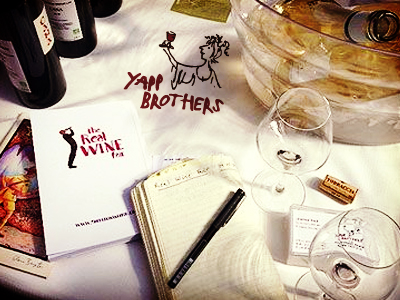
Aromatherapy - cork sniffingHere at Yapp Brothers we love our staff tastings but it is sometimes, in these days of multi-tasking and role covering, quite difficult to muster a respectable turn out. However last Friday was one opportunity when most of the Yapp team were present in Mere, so we made full use of the time to further our vinous education with a tasting based around a theme of aromatic wines. These make for wonderful summer drinking and are generally lighter, cool climate wines, usually unoaked, but big on bouquet. We tasted a flight of three Rieslings – two from our Australian producers and a classic example from the Alsace.

Our Neagles Rock Vineyards’ Riesling 2007 from the Clare valley (an area renowned for Riesling) is bottled under Stelvin® screwcap and comes in at 12.5% abv. We’ve just finished the 2007 vintage which was superb with a few years bottle age, and the 2009 compared well. This was very lively with the classic kerosene aroma, tight and minerally with plenty of lemon and lime characteristics. This would be perfect with spiced Asian cuisine (with chilli and coriander) but also ideal as a bracing aperitif.

Next up was the Jasper Hill Riesling 2009 (12%) from Heathcote in Victoria. This originates from a much warmer area of Australia, and is not currently commercially available as it is ‘dry-grown’ without irrigation and yields have been hit hard by drought over successive recent vintages. The reason wine-maker Ron Laughton doesn’t want to irrigate his vines is because as water gets ever scarcer, there will surely come a time when there will be a hefty financial charge for its use. If winemakers are already irrigating, they will either have to pay for the privilege in the future, or their vines will die because their root systems will be too shallow to reach any moisture. Again, the wine displayed a strong lemon and lime character, less minerally than the Neagles and a little more honeyed with an elegant petrolly finish.

Aromatherapy - wine selection

The Alsace Riesling 2004 (12.5% abv) from Charles Schléret was much darker in colour and very interesting to note that it was much fuller and more concentrated on the nose that it’s Australian counterparts. So often it’s the other way around with other grapes. This is a much bigger wine all round – fruitier, richer, more honeyed, mellower and full of flavours of mango and lychees. A perfect food wine.

Now to the Viognier comparisons. A tricky grape to grow but well worth the effort.  Even though its heartland is in the Northern Rhône, it doesn’t mind the heat, so the Jasper Hill Georgia’s Paddock Viognier 2009 which we have available for the first time at Yapp, thrives in the warmer climes of Victoria. It had a golden straw colour and it showed a very concentrated nose, with some oak influence and mango and peach notes prominent. A big wine (15% abv) – muscular and buttery but still nicely balanced.  We then tried the Condrieu Terrasses de L’Empire 2008 from Domaine Georges Vernay located in Viognier’s spiritual homeland. Georges’ daughter Christine took over the wine making here in 1997 s and still retains the exacting standards set by Georges when he, virtually single-handedly resuscitated the appellation during the 1970’s. Lighter in colour than the Jasper Hill, but showing the typical white flower and soft fruit nose of peach and pear. A decidedly fleshy palate of minerals and mango – very elegant and more restrained.

Aromatherapy - wine tastingTwo other wines which were very appropriate for the aromatic category were also from Charles Schléret – his Alsace (Tokay) Pinot Gris 2007 (14%abv) and the Gewurztraminer 2007 (14.5%abv). The former is made from the same grape that gives you the blandest versions of mass-produced Pinot Grigio, this was the opposite with a deep straw colour and a very rich nose of dried fruits and marzipan with a hint of yeast. The palate was typically Alsatian – oily and unctuous with a complex minerality in the finish. An ideal partner to foie gras.  The final wine of the tasting was one of Charles’ finest – a terrific example of what Gewurztraminer should be like. A big, rich, but well-balanced wine, full of the classic aromas of turkish delight, rose petals, and lychees with a fine minerality and a hint of white pepper. Again foie gras or the pungent local Münster cheese would make for fine accompaniments.

Our taste buds were so stimulated by the aromatic wine experience, that some of us promptly ordered a Chinese that evening to experience the various flavours with food. The wines paired up extremely well with a variety of dishes. I wonder if I can book that out on expenses?

Ambassador – You Are Really Spoiling Us!

August 25th, 2010 by Jonathan Hoad

Last week, I co-hosted a Provencal Dinner and wine tasting, ably assisted by Jason Yapp and the genial Chef-Patron of The Ambassador, Clive Greenhalgh.

Ambassador Cafe Wine TastingFor a nominal £10 fee, guests were free to partake in a 15 wine, tasting tour of Provence. With the bottles spread down The Ambassador’s long bar and Jason and I on dispensing duties, it made an enjoyable start to a cracking evening. We met lots of new people as well as some old familiar faces and it was great fun sharing the aromas and flavours of the region’s assorted wines with an inquisitive and appreciative audience. With such a diverse range of grape varietals including Grenache Blanc, Clairette, Bourboulenc, Marsanne and Vermentino in the whites and Cinsault, Syrah, Folle Noir and Mourvèdre amongst the reds, there was a wine and style for everyone and that’s not including the three different rosés on show.

All the wines showed well on the night and here are details of my 3 favourites:

White
Cassis: Clos Sainte Magdeleine 2008 – £16.75
This is always an interesting wine. Clairette, Marsanne and Ugni Blanc give a wine with a herb/pine aromatic nose and mouth-filling citrus flavours with an intriguing oily texture that carries the developing flavours that last for a long finish.

Rosé
Côtes du Luberon: Château la Canorgue 2009 – £12.25
Grenache Noir, Cinsault and Syrah form lovely red berry aromas that continue on the palate. Crisp and refreshing, it is a real taste of summer in a glass.

Red
Côtes de Provence: Domaine Richeaume Cuvée Tradition 2008 – £15.50
This has a fantastic nose, full of fruit, spice and herbs. On the palate, the Syrah provides the warming richness with a spicy core. Cabernet Sauvignon contributes to the backbone of mouth-chomping berries and robust, yet yielding tannins as well as a lingering touch of mint.

Ambassador Cafe

Ambassador Cafe

Following the tasting, there was an option to stay for a three course Provencal feast for a bargain £25. There were six wines available to purchase from the tasting to consume with the dinner. My table opted for a Coteaux d’Aix: Domaine Oullières Blanc 2009 (£9.25) to go with the generously portioned Pissaladière with Cornish Sardines. It’s salty, savoury flavours were well matched with the fleshy, oily sardines.

For the main course of Rump of Lamb with Olive Oil mash, peppers & lemon thyme, I just had to go back to the minty Domaine Richeaume. Hats off  to Clive for a superb dish. The lamb was cooked to perfection and the Domaine Richeaume’s complex flavours combined well with the tender meat and the delicious, rich mash.

Forgoing apricot tart we all shared a French cheeseboard. A glass of Côtes du Ventoux: Château Valcombe 2005 (£9.95) was the perfect all-rounder to finish with. Plummy fruit, light spiciness and rounded tannins lead to a smooth finish and there was still enough dry, acidity to cut into the stronger cheeses and leave one wanting more.

Overall, it was a great evening and although officially ‘work’ it never seems as such when you have such a relaxed, fun crowd sharing the experience. From the favourable comments on the night, it really reminded me of how interesting and educational these events can be.

Clive Greenhalgh - Ambassador Cafe

Clive Greenhalgh - Ambassador Cafe

If you are not on the Yapp mailing list, do get in touch or sign up on the Yapp website, as we regularly advertise our upcoming tastings and dinners via our mailing. Alternatively, our website is constantly updated and you can find the latest events here Yapp events.

Ambassador Cafe sign

Ambassador Cafe

The Ambassador, 55 Exmouth Market, London EC1R 4QL.

Tel: 020 837 0009

www.theambassadorcafe.co.uk

JH

Job Envy

August 18th, 2010 by Jason Yapp

There is a common misconception that being a wine merchant is a fantastic ‘lifestyle’ career and that we spend 90% of our time swanning around glamorous vineyards in warmer climes drinking wonderful wines and stuffing ourselves on the fantastic local cuisine. Well we do spend a fair amount of time doing just that and of course it’s very enjoyable but there can be a broad gulf between the public perception of a wine buying trip and the reality. Few people ponder upon the endless driving, bad hotel experiences, haggling over prices in a foreign language and soulless wines fairs. Not to mention a forced diet of andouillettes and fromage de tête and coping with the gastric crise that inevitably ensues – Raymond Briggs captures this experience well in Father Christmas goes on Holiday.

Relentlessly tasting young, often unfinished, wines can really take its toll which is why, rather like a flat stage in the Tour de France, the vineyards of Vouvray and Montlouis make for a welcome respite on a tasting trip. Thankfully there are no red wines to taste here and so no aggressive tannins to contend with, just fresh, clean, un-oaked still and sparkling wines made from Chenin Blanc.

Vouvray & Rillettes

Rillettes and crottins de chèvre chez Aubert

In the Coquette Valley in Vouvray Didier Aubert makes classic wines by traditional methods. His marvellous Vouvray Mousseux Brut is hand-riddled and bottle-fermented. It has a toasty nose, a lively mousse and an elegant dry palate of ripe orchard fruit making it perfect for parties and family celebrations. Didier’s Vouvray Sec is always a pleasure to taste, not least because his father, Jean-Claude, is apt to appear with tartines of the delicious local rillettes. This apple-scented, mineral-edged, whistle-clean Chenin Blanc makes a perfect foil for the potted pork – it’s a dangerous combination as both are very more-ish. The off-dry Vouvray Demi-Sec has a similar bouquet and palate-cleansing acidity but a touch more residual sugar which lends it well to pâtés and cheese. The botrytised Vouvray Mœlleux is rich and honeyed and capable of taking a decade’s bottle-age in its stride. We normally finish here by sampling Jean-Claude and Didier’s delightful ‘Cuvée les Tonnelles’ – a gentle, fruity, rosé fizz made from 90% Gamay and 10% Gros Lot that is bursting with ripe raspberry flavours.

On the opposite bank of the Loire at Montlouis, Laurent Berger is equally welcoming and his wines are every bit as enjoyable. His superb Montlouis Mousseux Brut is a shade drier and crisper than the Aubert offering and is a failsafe aperitif. Laurent’s Montlouis Sec is taut and tangy and unfailingly reliable. In favourable vintages Laurent makes a modicum of his coveted Côte Saint Martin – a late-harvested, botrytised Chenin Blanc with heady floral aromas and a complex palate of baked apples, dried fruit and minerals with a rich, decadent finish. It makes for a wonderful finale to a pleasurable day’s tasting.

What’s not to like?

The Yapp Tasting Team ready for anything in Montlouis

Piscine Perfection at the Riverside

August 11th, 2010 by Jason Yapp

The Riverside Restaurant in West Bay, Dorset, just east of Bridport has been in the safe hands of the Watson family for 50 years and ought to be subject to a preservation order.

Riverside Restaurant Bridport

This rather anachronistic resort, which retains a certain ‘I’m only here for the beer – kiss me quick’ charm at first seems an unlikely setting for a gastronomic gem save for (I concede) its proximity to the sea. Visitors have to cross a narrow footbridge to gain entry to the Piers Gough and Roger Zogolovitch designed premises which were installed in 1976 at a higher elevation to the original turn of the century cabin after successive floods.


The keys to the Riverside’s success are its simplicity (which extends to both the décor and the cooking) and the fastidious attention to detail of the hands-on patron Arthur Watson who has been at the helm here since 1964 when he was demobbed from the Navy. Nothing is over-fussy at the Riverside, this is an establishment that is very confident in its offering which is principally very fresh seafood that is simply and expertly cooked with minimal adornment. The wine list is well thought out and presented in a manner to appeal to both experts and novices and the service is both relaxed and professional – which is much harder to achieve than it sounds.


At this juncture I ought to declare a personal interest. When I started working for our family business almost 2 decades ago it was Arthur who gave me my first break with a guest slot for a ‘Spring Selection’ of 3 white wines. These were a 1991 Saumur at £8.25, a 1992 Quincy at £11.90 and a 1997 Hermitage from Chave at £16.50 – and those were their selling prices!


Arthur still takes a keen interest in the Riverside’s wine list (assisted by sommelier Joe Taylor) and if I call in with some wines to sample he sometimes gives me a spot of lunch at the bar – which amply justifies the 110 mile round trip from Mere.

Langoustines at the Riverside Restaurant Bridport

Last week I dropped by with a few new discoveries and was treated to an enormous plate of fresh langoustines that were bisected lengthways, in a manner of which Damien Hirst would have been proud. They were absolutely heavenly with a (small) glass of rosé Chinon from Château de Ligré as one might deduce from the accompanying photograph. Despite the fact that the restaurant was packed with over 80 diners (on a Wednesday lunchtime) Arthur also proffered a Dover Sole that it would have been churlish to turn down. The delicate white fish went down extremely well with a nervy young Charentais Sauvignon from Domaine Gardrat. The coffee by the way is excellent too.


As regular readers of this blog will know I eat out well and frequently but I know of very few restaurants that are as consistently satisfying as the Riverside.


Here’s to the next 50 years!

Rhône 2009 – Vintage of the Decade

August 9th, 2010 by Jason Yapp

Earlier this year there were attempts within the UK wine trade to ‘talk up’ the 2008 Rhône vintage – as noted on our blog entry on March 10th. Although some perfectly decent wines were made in the Rhône valley in 2008 it was not an outstanding vintage.

Fortunately as our vineyard visits and tastings to date have confirmed Rhône 2009 is the ‘real deal’ – a markedly superior vintage that merits attention and will offer the opportunity to buy and lay down some exceptional wines. Early bottlings of junior wines that we have now started to ship such as our Côtes du Vivarais and Jean-Pierre Boisson’s excellent ‘La Côte’ Côtes du Rhône Villages show much promise that augurs well for their more senior siblings.

Cotes du Rhone 2009

Early bottlings of the 2009 vintage in the Rhône have been impressive.

As in Bordeaux, Burgundy and all France’s other main wine producing regions the Rhône valley for 2009 enjoyed optimum ripening conditions in both the North and the South. A cold and wet winter and spring provided essential water reserves which were critical during August’s high temperatures. Sustained September sunshine meant that wine-makers could harvest individual parcels at peak maturity. Warm and dry conditions yielded a crop of phenolically ripe grapes with good colour, tannins and acidity – the resultant wines are already impressive in barrel but should have great aging potential when bottled. The heat meant that volumes were somewhat reduced, particularly in the south, but wine makers throughout the region are delighted with the quality of the harvest.

2009 is unquestionably a ‘Grand Millésime’ in the Rhône and comparisons are already being drawn with stellar vintages such as 1999, 1978 and the legendary 1929. We will be publishing detailed tasting notes and reports on individual wines in due course so do make sure that you have subscribed to our e-mail newsletter if you want to receive the latest information on this superb vintage.


Further expert opinion on Rhone 2009:

“To reiterate, the good news is that 2009 is looking like a potentially superb vintage. Even if you miss out on the 2007 vintage, 2009 may come close to rivaling that stupendous year, but the quality cannot be ascertained until the wines have finished their malolactic fermentation in late spring, 2010.”
Robert Parker, The Wine Advocate


“2009 is shaping up to be an exceptional vintage, most likely the best one of the last decade. It’s indeed quite seldom to obtain such complete vintages: with white wines expressing themselves with finesse and maturity and where red wines deliver strength and elegance without being heavy.”
Michel Chapoutier, Hermitage


“I knew that it could be great, but I had two worries: Will we have enough acidity and how will the tannins ripen with the lack of water? I got my answer at the end of the alcoholic fermentation: The tannins are beautiful; the acidity great.”
Maxime Graillot, Crozes Hermitage


“The key was that the heat wave came after veraison so the maturity was not blocked, the grapes were concentrated and the acidity and structure was balanced.”
Philippe Cambie, Châteauneuf du Pape


Read about Rhone 2009 on the Yapp Brothers website. We will update this page with further information as it becomes available.

Desperate in the Dordogne

August 4th, 2010 by Jason Yapp
Domaine de l'Ancienne Cure

Domaine de l'Ancienne Cure

Every summer la famille Yapp retires to a sleepy backwater of La France Profonde that lies roughly between the small towns of Nontron (knives) and Thiviers (foie gras) to enjoy the not so Grandes Vacances where the biggest decisions of the day are what to cook that evening and what to drink with the meal. Unfortunately, although less than 100 miles from Bordeaux, Perigord Vert is not exciting wine country and even if we stock up in the Loire valley en passant things can get pretty desperate after a week or so.

Fortunately, there is one long-serving and ultra-reliable Yapp supplier within strike range in the form of Christian Roche whose Domaine de l’Ancienne Cure lies beside the route nationale 21, just south of Bergerac. Here Christian fashions a superb Bergerac Sec from an un-oaked ‘Bordeaux’ blend of 70% Sauvignon and 30% Semillon. It is dry and fruity and what the locals call ‘vif’, with an attractive citrus fruit bouquet and a clean, zesty palate. I can testify beyond any shadow of a doubt, over numerous vintages, that it makes for decent holiday drinking and is a jolly versatile crowd-pleaser.

Thiviers Poster

Christian also produces a sublime botrytised Monbazillac from a blend of 80% Sauvignon and 20% Muscadelle. It has a lovely tawny colour and is richly honeyed with complex notes of dried fruits, nuts and caramel with a heady orange blossom bouquet. Traditionally it is served chilled in small glasses to accompany tartines of pâté de foie gras but it also makes a splendid accompaniment to salty blue cheeses (especially Roquefort) and all manner of fruit-based desserts.

So if you are holidaying in the locale and see a battered Peugeot estate containing a border terrier and a couple of bored kids loading up beside the RN 21 it might well be me on a mercy mission to re-stock the cave personelle.

Gong Show!

July 28th, 2010 by admin

We were thrilled to win Decanter magazine’s coveted Specialist Merchant award last autumn and we must be getting something right here at Yapp Brothers because we have been nominated for awards in no fewer than 4 categories in the forthcoming International Wine Challenge 2010: Rhône Wine Merchant of the Year, Loire Wine Merchant of the Year, French Regional Wine Merchant of the Year and South-West of England Wine Merchant of the Year.

International Wine Challenge awards 2010

International Wine Challenge awards 2010

The results will be announced at a gala dinner at the Park Lane Hilton on 7th September – the judges for the 2010 awards are the IWC co-chairmen Tim Atkin MW, Sam Harrop MW, Charles Metcalfe and Derek Smedley MW. These will be joined by Laura Jewell MW, Spar UK Ltd., Simon Thorpe MW, Negociants UK Ltd., David Cox, NZ Winegrowers and Rowan Gormley.

Personally I can’t wait to thank my Mum, my Dad my colleagues here at Yapp Brothers our wine maker friends in France, our loyal customers, my shrink, my dog, my dog’s shrink, anybody else who knows me and both of the people who read this blog!

Saumur Champigny Domaine Filliatreau: Staff Tasting June 2010

July 26th, 2010 by Patricia
Fred Filliatreau at Yapp Brothers

Fred Filliatreau at Yapp Brothers

While Fred Filliatreau was over visiting last month, we had the pleasure of a staff tasting at Mere of six of his wines from recent vintages all of which were showing really well. We’re not the only ones to think so judging from the recent press accolades for Cuvée Domaine Filliatreau 2008 and Vieilles Vignes 2007 in the Spectator and Telegraph Weekend magazines respectively.

Fred’s illuminating commentary as we tasted helped put the wines in the context of a formidable winemaking lineage. Fred joined his father Paul in 1990, who himself was largely responsible for modernising the Saumur Champigny appellation in terms of winemaking practices in the 70′s as well as creating a strong sense of community in the local winemaking fraternity. Robin Yapp first bought his wines in 1976. Fred has continued to be a driving force in the Appellation, championing organic methods of cultivation: Saumur Champigny was the first French appellation to promote a biodiversity programme in the vineyards, including forbidding the use of herbicides and encouraging the study of weather patterns.

He is rigorous in his insistence on low yields and produces beautifully balanced, well-crafted and elegant wines. Fermented between 15 and 30 days, depending on the cuvée, in thermostatically-controlled stainless steel vats, the aim is to produce light, fruity and refreshing wines that are designed primarily for enjoyable drinking now but which have distinct style differences between the cuvées. All the wines lend themselves to chilling but perhaps the Cuvée Domaine Filliatreau especially.

Here are my notes from the tasting:

Château Fouquet 2009

13% abv (alcohol by volume). Vines planted in 1987 east of Saumur in the commune of Brézé on chalky-clay soil and one of the best terroirs of the appellation. Organically produced, well-balanced, with medium body and length with excellent concentration of ripe fruit (brambles) and supple tannins. Very well-balanced and drinking now but has potential to age up to10 years. With age it will become spicier. A great food wine creating a fresh sensation in the mouth. More forward drinking than the 2008.

Château Fouquet 2008

Delicious aroma of violets and ripe dark berries. More vegetal and savoury on the palate than the 09. Will age up to 5 years. As with all cuvées the grapes are hand-harvested and with Château Fouquet, the limit per basket load is 20 kgs so that the grapes don’t get crushed allowing the juice to oxidise.

Cuvée Domaine Filliatreau 2008

12.5% abv. From parcels of vines, approx. 20 years old on chalky-clay soil around the village of Chaintres. Biggest selling wine by volume to the restaurant trade-especially Paris. Fruit from 25 year-old vines. Grapes macerated for 15 days in stainless steel. Versatile, peppery, fresh and fruity, supple tannins. Drink young and between 12˚ and 14˚C.

La Grande Vignolle 2008

12.5% abv. Grapes are harvested from 45 year-old vines on chalky subsoil. Macerated for 20 days in stainless steel. Spicy on the nose. Medium body with great silky texture. Great balance with integrated fruit, tannins and acidity. Big seller in both the UK and the US (where they like it unfiltered).

La Grande Vignolle 2007

12.5% abv. 2007 was a complicated vintage with lots of rain in the summer. Savoury on the nose and quite restrained on the palate but extremely well-balanced with copious ripe bramble fruit and acidity and tannins to match. Well-matured, medium-weight and not too concentrated. Vestigial green pepper aromas but well-integrated with a pure fruit core.

Vieilles Vignes 2007

12.5% abv. Fruit from 80 year-old vines. Sherry, raspberries, pepper and spice on the nose. Delicious velvety texture and well-integrated fruit on the palate. Mid-weight and good length. Drinking very well and would be excellent with roast lamb but steer clear of the mint sauce!

Murder in Marseilles

July 16th, 2010 by Jason Yapp
The Marseilles Trilogy

The Marseilles Trilogy

If, like me, you have a penchant for a noir crime novel and are partial to the food and wine of Provence you should make a bee-line for Jean-Claude Izzo’s peerless ‘Marseilles Trilogy’, published (in style and in English) by Europa Editions and excellently translated by Howard Curtis. The dark underbelly of Marseilles is exposed therein with insight and affection and it is littered with references to the local wine and cuisine. Izzo was born in Marseilles, to Italian immigrant parents, in 1945 and the soul of the city is infused in his writing. He died in 2000 aged 55 having achieved fame in the 1990s with the publication of 3 novels featuring retired cop Fabio Montale. Collectively known as the ‘Marseilles Trilogy’ the books draw heavily on Izzo’s upbringing in Marseilles, national service in Djibouti (where he worked as a photographer and journalist for a military newspaper) and early career in the book trade.

Jean-Claude Izzo 1945-2000

Jean-Claude Izzo 1945-2000

Food and drink were clearly important to Izzo as he draws the reader into details few novelists would consider. How to make the perfect pistou soup, bouillabaisse and aïoli are debated at length and the numerous references to wine are precise and clearly based on a deep personal knowledge – “I put down two litres of red wine from the estate of Villeneuve Flayosc, in Rouquefort-la-Bédoule. A wine a Breton friend named Michel had introduced to us the previous winter. Château-les-Mûres. Really delicious.” Pleasingly, on page 102 of the final book ‘Solea’ our Vieux Marc Égrappé [£29.95 since you ask] gets a mention: “Fonfon had brought along a bottle of Bunan. An old stemmed marc from La Cadière, near Bandol. “Taste this,” he said. “It’ll make a change from that Scotch of yours.” It was delicious. Quite different from my Lagavulin with its slightly peaty taste. The Bunan was dry, but extremely fruity, smelling of scrubland. By the time I’d won two games of rummy and lost eight, I’d already enjoyed four little glasses of it.”Izzo’s other great passion was music and his catholic tastes encompassed everything from jazz to rap, reggae and Neapolitan folk. Again the referencing is incredibly detailed but it’s the food and wine descriptions that really stay with you: “Her bouillabaisse was one of the best in Marseilles. Scorpion fish, gurnard, conger, dory, angler fish, weever, pandora, rainbow wrasse…A few crabs, too, and sometimes a lobster. Only rock fish. That’s what made it different. And for the sauce, she had a particular genius for combining garlic and peppers with potatoes and sea urchin. But her bouillabaisse was never on the menu. You had to phone regularly to know when she was making it.”

If that doesn’t stimulate your appetite for a Provençal feast then you are probably best off sticking to the latest Dan Brown but if you really want to transport yourself to the bars and terraces of the Vieux Port and the Panier then Izzo is in a class of his own.

“What makes [Izzo's] work haunting is his extraordinary ability to convey the tastes and smells of Marseilles, and the way the memory and obligation haunt every step his hero takes.”

The New Yorker

The Welsh Connection

July 9th, 2010 by Hamish Catanach
Caravan - North Wales

Caravan - North Wales

For as long as I can remember I’ve taken holidays in the wilds of North Wales and  growing up in the Midlands I’m sure I’m not alone in this experience. It’s a place of breathtaking beauty and extremes – if the sun shines its idyllic however if it decides to rain, its well, the reverse.

My parents have a static caravan that has to still be painted green to ‘blend in’ with the country side on the North coast of the Llynn peninsula, it’s nearly all owned by the National Trust so it’s a case of no (white) blots on the landscape.

I spent my childhood on the spectacular beaches and now my children do the same – nothing appears to have changed in the last 40 years and all still seems reassuringly familiar.

On heading off last week I had packed my holiday wines – I’d not tempted fate and had my usual selection of southern Rhone reds – no whites or rosé, as that would have suggested that I was expecting the sun to shine at least once during the week and recent experience had indicated warming reds would be more appropriate.

I suspected that my Welsh wine experience would be a fairly solitary one but once you’ve got wine under your skin it seems to appear when you least expect it. We met another family with small children on the camp site (again borrowing their parents caravan and with a good 20 years of holidaying there under their belt) and during a chat over an impromptu BBQ Jeremy asked if I’d like a drink – and then went on to say, I really only drink wine and I love French wine – small world. So, we set about my holiday consignment and over the next few days we dispatched my Vacqueyras: Cuvée Spéciale 2003, Côtes du Rhône Villages Rasteau: Saint Gayan 2006 and a few others, including my last bottle of Vin de Pays Duché d’Uzès: Camp Galhan Pérassière 2007 that I’d left there from my last visit.

Slate - Blaenau Ffestiniog

Slate - Blaenau Ffestiniog

Later in the week we were on a small beach called Towyn that has always had a small shop (or ‘shed’) on the cliff top that sells ice creams and other beach paraphernalia – but this year had diversified into general random Welsh products – I’ve always liked the ‘unusual’ so was intrigued to see, for want of a better word,  a “lump” of Welsh slate by the assorted Ben 10 surf boards – but slate with 3 holes drilled through that I decided had to be made for wine – and it was!

The slate was from the, now closed, Blaenau Ffestiniog quarry so there was never going to be another one – in the same way that wine vintages can never be repeated it was a must have – my wife was not as keen it has to be said – but anyway it’s now safely back in Wiltshire.

So, once you’ve got the wine bug – it catches you out when you least expect it!